Face Massage Tools : The Ancient Japanese & Chinese Secrets Behind Your Best Skin

Women in Japan and China have been using these tools for over 2,000 years — not because they’re trending, but because they work. Here is everything you need to know.
The Philosophy
In Traditional Chinese Medicine, the face is a map — each zone linked to an organ and an energy flow called qi. Tools like gua sha and jade rollers restore internal balance from the outside in. In Japan, Kobido (developed 1472 for the imperial court) works the face’s 40+ muscles with precise pinching, tapping, and lifting — visibly sculpting without a needle or filler.
“The concept of bihada — beautiful skin — is about clarity, circulation, and a face that moves freely, without holding a gram of unnecessary tension.”
The 4 Essential Tools
| Tool | Origin | Best for |
| Gua Sha Stone | China · 220 BCE | Sculpts, lifts, drains lymph. |
| Jade Roller | China · 7th Century | Morning depuffing & absorption. |
| Rose Quartz Roller | China · Ancient | Sensitive skin, stays cold longer. |
| Kobido (hands) | Japan · 1472 | Muscle lifting, 500-yr technique. |
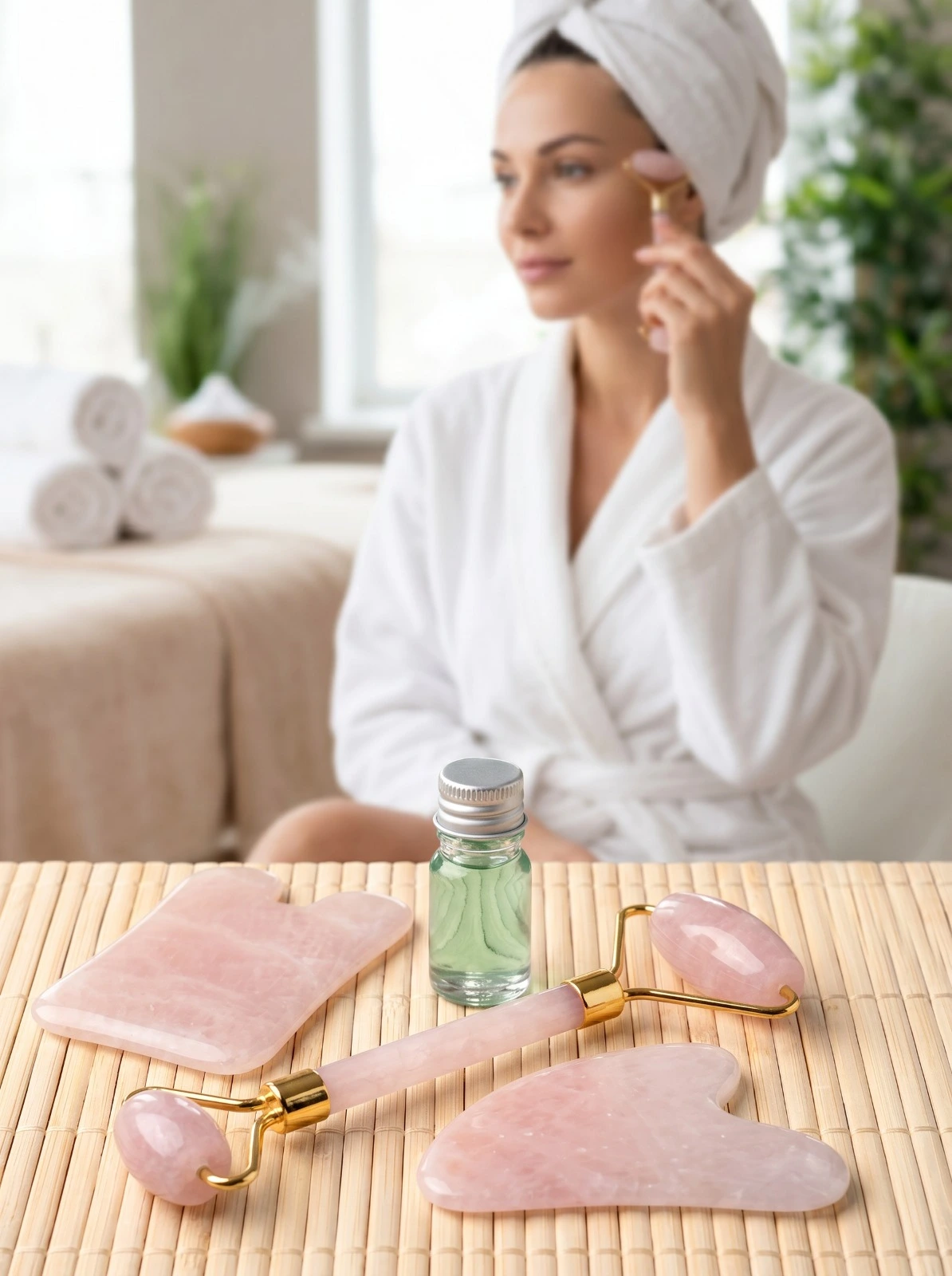
Which stone? Rose quartz for sensitive skin and beginners. Jade for sculpting and cooling. Bian stone for the most therapeutic experience. For gifting: rose quartz — universally beautiful and meaningful.
Why It Works — The Science
- Lymphatic drainage: moves fluid away from the face, reducing puffiness and under-eye bags.
- Circulation boost: delivers oxygen to skin cells — instant glow, long-term radiance.
- Fascia release: breaks adhesions that pull the skin down, creating a visible lift.
- Collagen stimulation: consistent massage activates fibroblasts — firmer skin over months.
- Cortisol reduction: 5 minutes of face massage measurably lowers the stress hormone linked to breakouts and ageing.
How to Use Gua Sha — Correctly
Facial gua sha is completely different from body gua sha — gentle pressure, no marks, always upward.
- Always apply facial oil first — the stone needs slip. Never use on dry skin.
- Start at the neck. Long upward strokes from collarbone to jaw open the lymph nodes before you move upward.
- Hold the stone nearly flat (15–30°). Use the curved notch along the jaw, flat edge on cheeks and forehead.
- Stroke outward and upward — never downward. Three to five strokes per zone: jaw to ear, nose to temple, inner brow to hairline.
- Finish with strokes down the neck and across the collarbone to complete the drainage circuit.
Avoid gua sha: over active breakouts, sunburned or broken-capillary skin, or if taking blood thinners.
Your Daily Ritual
Morning (3–5 min): Cold stone from the fridge. Apply serum. Drain neck first, then upward across the face. This one habit will visibly change your skin within a week.
Evening (5–10 min): Cleanse, apply oil, gua sha slowly — jaw, cheekbones, forehead. Finish with Kobido pinching along the jawline. This is the sculpting work that compounds over months.
“You cannot buy time. But you can change how it lands on your face.”