
Matcha: From Ancient Ritual to Modern Obsession

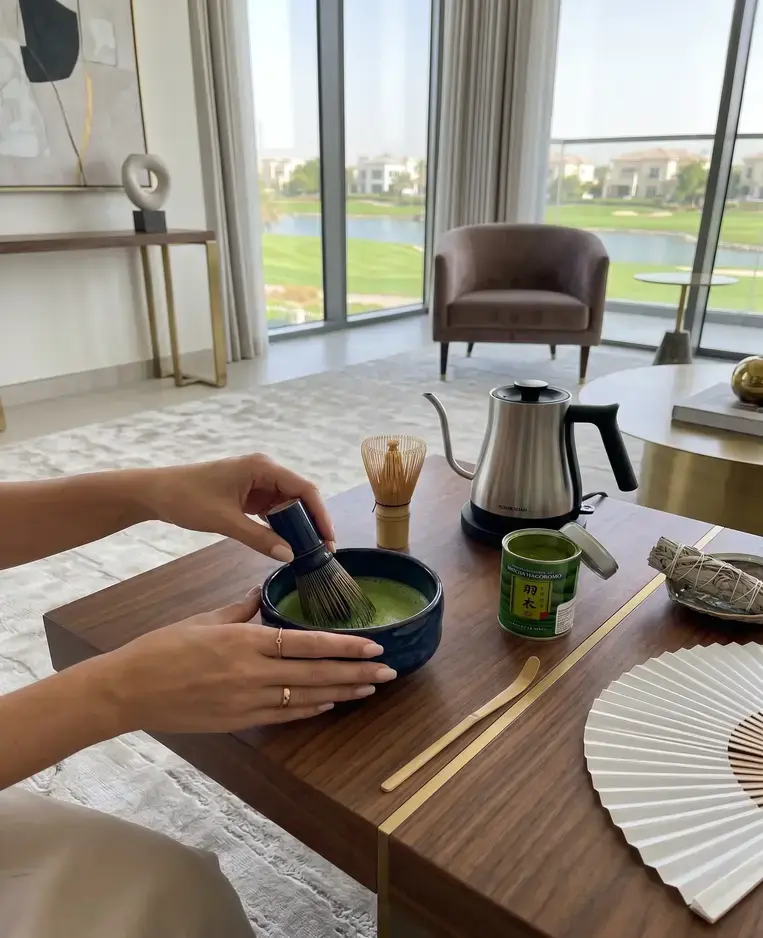
A thousand years of intention — in every sip.
Before matcha became a latte. Before it became a trend. Before it ever touched a café menu in New York, London, or Dubai — it was a ritual. And rituals, by definition, are never accidental.
Matcha is not tea in the way most people think of tea. You do not brew it and discard the leaves. You consume the entire leaf — ground to a fine powder so delicate it takes up to an hour to produce just 30 grams using a traditional granite stone mill. When you drink matcha, you are drinking the whole plant. Every antioxidant, every amino acid, every mineral the leaf spent weeks developing in the shade.
That deliberateness — the decision to take something and honour all of it rather than extract only the convenient parts — is perhaps the most matcha thing about matcha.
The Story Behind the Bowl
It begins in China, around the 7th century Tang Dynasty, where powdered tea was first prepared and consumed by monks seeking clarity during long meditation sessions. But it is Japan that gave matcha its soul.
In 1191, a Zen Buddhist monk named Eisai returned from China carrying tea seeds and something more valuable — a philosophy. He planted the seeds in Kyoto and wrote Kissa Yojoki, “How to Stay Healthy by Drinking Tea,” the first Japanese text on the subject. His central argument was radical for the time: tea was not simply a drink. It was medicine. It was meditation. It was a way of being fully present in a world that constantly demanded you be elsewhere.
A Timeline of Matcha
- 7th Century — Tang Dynasty China — powdered tea emerges: Buddhist monks first use powdered tea to sustain focus during extended meditation sessions.
- 1191 — Eisai brings matcha to Japan: Zen monk Myoan Eisai plants tea seeds in Kyoto and writes the first Japanese text on tea’s healing properties.
- 15th Century — Chado — the Way of Tea — is formalised: Tea master Sen no Rikyu develops Chado: the ceremonial preparation and drinking of matcha as a form of mindful practice.
- 16th Century — Samurai adopt matcha before battle: Warriors drink matcha before combat for sustained energy and focus — the original pre-workout.
- 2010s — The global matcha movement begins: Matcha moves from specialty Japanese stores to mainstream cafés worldwide. The latte arrives. The obsession begins.
- Now — Dubai embraces matcha culture: From specialty cafés across JLT and the Marina to wellness boxes — Dubai makes matcha central to its identity.
“The Japanese do not have a word for ‘killing time.’ Every ritual, including the tea ceremony, is designed around the opposite idea — that time is too precious to pass through unnoticed.”
The Health Hacks — Why Your Body Loves It
Here is where modern science meets ancient wisdom — and for once, the science agrees with the monks. Matcha is not a wellness trend built on marketing. It is a genuinely remarkable substance.
- 137× more antioxidants than regular green tea: Because you consume the whole leaf, matcha delivers exponentially more EGCG — the antioxidant linked to reduced inflammation, improved heart health, and cellular protection.
- L-Theanine — the calm energy molecule: Matcha contains L-theanine, an amino acid that promotes alpha brain waves — the state of relaxed alertness. It buffers the caffeine, creating focus without jitters. The monks knew this intuitively.
- 4–6 hours of sustained focus without the crash: Unlike coffee, matcha releases caffeine slowly due to L-theanine binding. The result is hours of gentle, clear-headed energy. No spike, no crash, no 3pm slump.
- Chlorophyll — why it’s that shade of green: Matcha leaves are shade-grown for 3–4 weeks before harvest, forcing the plant to produce extra chlorophyll. This gives ceremonial matcha its vivid colour — and its detoxifying properties.
The shade-growing secret: Weeks before harvest, tea farmers cover matcha plants from direct sunlight. Deprived of light, the plants produce more chlorophyll and L-theanine in an attempt to absorb every available photon. This deliberate stress is what makes ceremonial grade matcha so nutritionally dense — and so expensive.
From Tradition to Trend — and Back to Ritual
For centuries, matcha lived quietly inside Japan’s tea culture. The ceremony was the point. The bowl, the whisk, the water temperature, the number of strokes — all of it codified, deliberate, sacred.
Then the world discovered it, and for a while, it nearly lost its soul. Matcha-flavoured Kit Kats. Matcha face masks. Matcha ice cream at airport food courts. The word appeared on menus alongside ingredients that would have horrified the monks of Uji.
But something interesting happened: the people who discovered real matcha — ceremonial grade, properly whisked, tasted without sweetener or milk — came back to the ritual. The slow whisking. The warmth of the bowl. The impossibility of checking your phone while you were doing it properly.
“In a world of infinite scroll and instant gratification, matcha requires something radical: your full attention for five minutes. That is not a limitation. That is the entire point.”
How to Make Perfect Matcha
The Perfect Bowl — Ceremonial Style
You will need:
- 1–2 tsp ceremonial grade matcha
- 60ml hot water (80°C — not boiling)
- Bamboo whisk (chasen)
- Small sieve for sifting
- Matcha bowl (chawan)
The method:
- Sift the matcha through a fine sieve into your bowl — this removes lumps and aerates the powder.
- Add 60ml of water at 80°C. Never boiling — it burns the amino acids and turns the matcha bitter.
- Whisk in a brisk W or M motion — not circular — until foam forms on the surface.
- Drink immediately, holding the bowl with both hands. Sit down. Breathe.
Matcha as a Gift — Why It Lands Differently
There are gifts that say I bought something. And there are gifts that say I thought about you long enough to choose something that matches exactly who you are. Matcha belongs to the second category — when chosen well.
It is a gift for the person who appreciates quality over quantity. Who has a morning routine they protect. Who knows the difference between a ceremony and a transaction. Who, when they open something beautiful, will actually use it.
At Atiya Box, we curate our wellness collections with exactly these people in mind. The woman who has everything except five minutes of daily peace. The friend who drinks matcha like she means it. The person in your life who understands that how you start your morning shapes everything that follows.
The Atiya Box matcha gift philosophy: We pair ceremonial grade matcha with items that complete the ritual — not just the drink. A beautiful bowl, a quality whisk, something calm to read alongside it. The gift is not the matcha. The gift is the ritual.